
Does light impact wine conservation?
Light is one of the main enemies of wine in the cellar. UV, LED lighting, and filtering glasses: understanding its impact helps avoid aromatic alteration and the "light taste."

Light is one of the main enemies of wine in the cellar. UV, LED lighting, and filtering glasses: understanding its impact helps avoid aromatic alteration and the "light taste."
9 min read
9 min read
The answer is clear: yes, light alters wine. Wine is a living product, sensitive to physical and chemical variations. Prolonged exposure to light — whether natural or artificial — can cause photochemical reactions responsible for aromatic degradation. Specialized sources agree: optimal preservation relies on darkness or strictly controlled light.

According to several technical analyses (Swisscave, 2019; Avis Vin Le Figaro, 2024), UV rays trigger chemical reactions within the wine. They can:
degrade certain polyphenols
alter aromatic compounds
accelerate oxidation
White and sparkling wines are particularly sensitive.
The "light taste" is a well-known phenomenon, especially in Champagne. It results from a reaction between light and certain sulfur compounds present in the wine. This produces undesirable aromas that sometimes recall cooked cabbage or eggs. This phenomenon is documented by several specialized media (Wine Upon a Time, 2024; OenoLED, 2021).
👉 Repeated exposure, even in a commercial showcase, may be enough to alter a fragile wine.

Not all lights are created equal.
contains UV
penetrates deeply
difficult to control
That’s why traditional cellars are buried.
Fluorescent tubes emit a portion of UV.
They are not recommended for long-term preservation.
Modern LEDs are preferable because they:
emit little to no UV
produce less heat
allow precise control of color temperature
But be careful: an improperly calibrated or too powerful LED can generate local thermal elevation.
Here is a synthetic summary:
Type of light | Impact on wine | Recommendation |
|---|---|---|
Natural light | Strong UV exposure | To avoid |
Fluorescent | Moderate UV emission | Not recommended |
Halogen | Strong heat | To prohibit |
Calibrated LED | Low UV, limited heat | Recommended |
Indirect LED | Minimal impact | Ideal |
The ideal remains:
indirect light
occasional activation
absence of permanent exposure
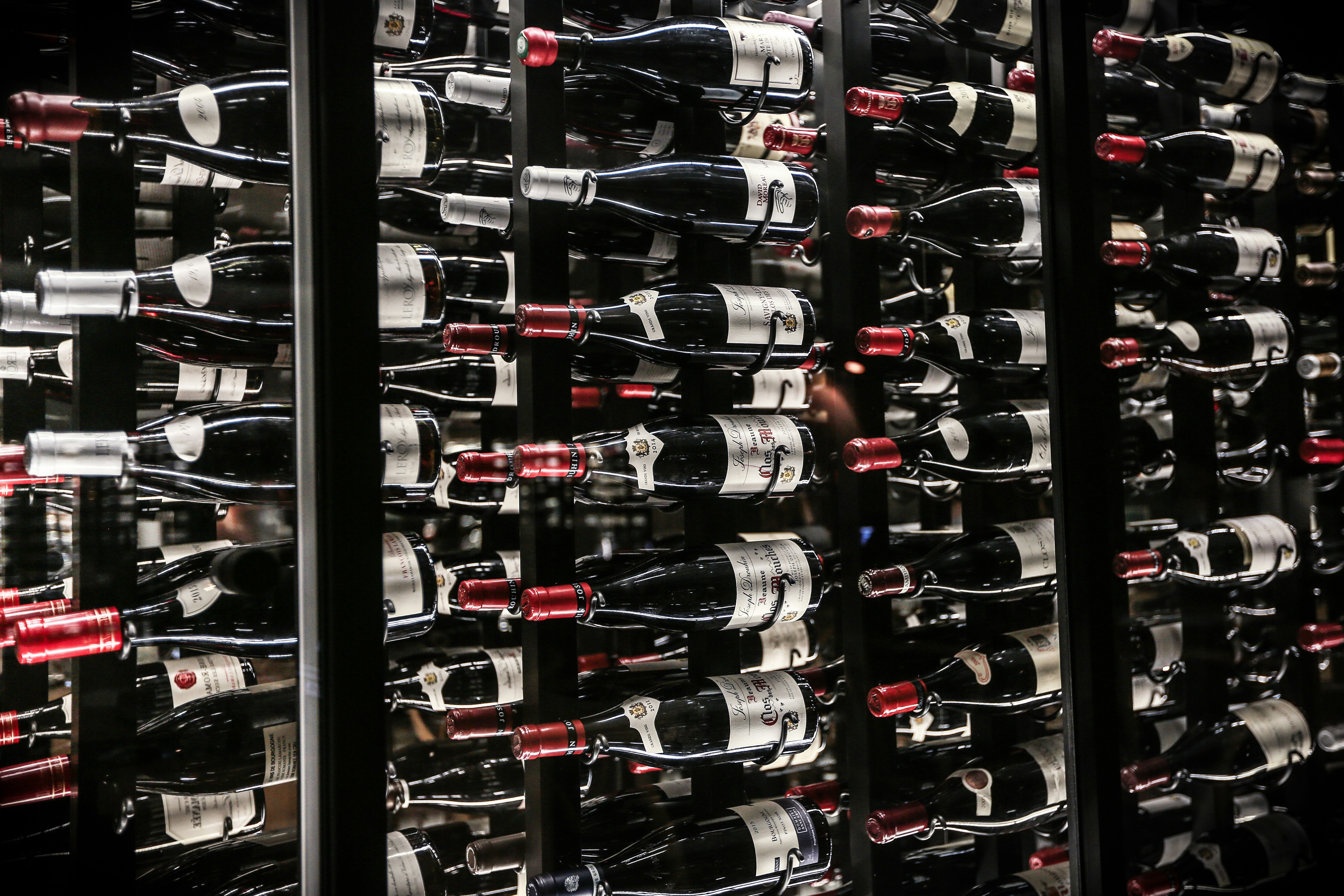
In a contemporary architectural project, the cellar is often visible. This implies:
glazing that filters UV
dew point management
thermal control
scenographic lighting compatible with preservation
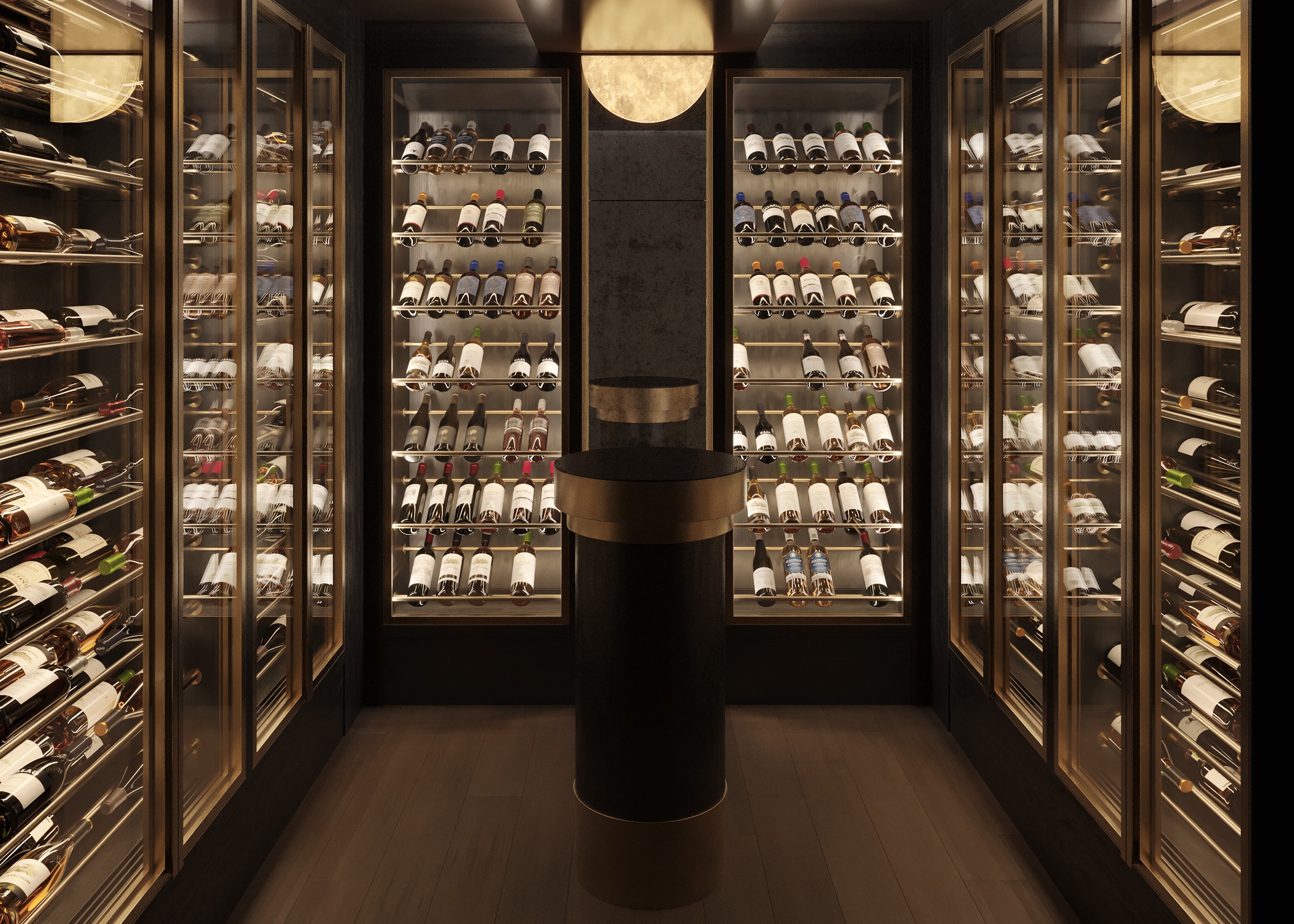
At Maison Borio, glassed-in cellars integrate specific technical solutions: adapted glazing, calibrated LEDs, advanced thermal regulation. You can check our know-how or discover our projects to understand how to reconcile design and preservation. Light should never be thought of solely as an aesthetic tool. It is an integral part of the overall climate system.
Light degrades wine through photochemical reaction
UV is particularly harmful
White and sparkling wines are the most sensitive
Calibrated LEDs are preferable
A visible cellar requires appropriate technical solutions
Light directly impacts wine preservation. This is not a hypothesis, but a documented phenomenon. In a residential or CHR project, lighting must be designed in coherence with:
thermal regulation
UV filtration
ventilation
the actual use of the cellar
Scenography can never take precedence over preservation. To discuss a project or integrate a technically controlled glassed-in cellar, you can contact us via the contact page.
Yes. UV causes photochemical reactions that alter aromas and accelerate oxidation.
They emit little UV, but excessive intensity or poor installation can generate heat.
Their compounds are more reactive to light, which promotes the "light taste" phenomenon.
Yes, provided that filtering glazing and controlled lighting are used.
No. Activation should be occasional and controlled.
EuroCave
Storing wine in darkness
Official advice page – recent
https://eurocave.be/fr/conserver-le-vin-lobscurite/
Swisscave
Effect of light on wine
Technical blog – 2019
Avis Vin – Le Figaro
What effect does light have on wine?
Editorial media – 2024
https://avis-vin.lefigaro.fr/connaitre-deguster/quel-effet-a-la-lumiere-sur-le-vin-20240314
Wine Upon a Time
Light and wine: a duo to watch
Specialized blog – 2024
Les Grappes
What light for good wine preservation
Wine guide – 2025
https://www.lesgrappes.com/blogs/guide-vin/quelle-lumiere-pour-une-bonne-conservation-du-vin
A Vintage Sur Mesure
Lighting in the wine cellar
Advice page – 2025
https://avintagesurmesure.com/leclairage-dans-la-cave-a-vin-avintage-sur-mesure/
OenoLED
The Taste of Light
Technical article – 2021
http://oenoled.fr/gout-de-lumiere-oenoled/
Bottle of Italy
Taste of light – When light damages wine
Specialized blog – 2022
https://bottleofitaly.com/fr/blogs/notizie/gusto-di-luce-quando-la-luce-danneggia-il-vino
Ma Cave à Vin France
Wine preservation – Darkness
Specialized blog – 2024
https://cave-a-vin-france.com/blogs/blog/conservation-vin-obscurite
The answer is clear: yes, light alters wine. Wine is a living product, sensitive to physical and chemical variations. Prolonged exposure to light — whether natural or artificial — can cause photochemical reactions responsible for aromatic degradation. Specialized sources agree: optimal preservation relies on darkness or strictly controlled light.
According to several technical analyses (Swisscave, 2019; Avis Vin Le Figaro, 2024), UV rays trigger chemical reactions within the wine. They can:
degrade certain polyphenols
alter aromatic compounds
accelerate oxidation
White and sparkling wines are particularly sensitive.
The "light taste" is a well-known phenomenon, especially in Champagne. It results from a reaction between light and certain sulfur compounds present in the wine. This produces undesirable aromas that sometimes recall cooked cabbage or eggs. This phenomenon is documented by several specialized media (Wine Upon a Time, 2024; OenoLED, 2021).
👉 Repeated exposure, even in a commercial showcase, may be enough to alter a fragile wine.
Not all lights are created equal.
contains UV
penetrates deeply
difficult to control
That’s why traditional cellars are buried.
Fluorescent tubes emit a portion of UV.
They are not recommended for long-term preservation.
Modern LEDs are preferable because they:
emit little to no UV
produce less heat
allow precise control of color temperature
But be careful: an improperly calibrated or too powerful LED can generate local thermal elevation.
Here is a synthetic summary:
Type of light | Impact on wine | Recommendation |
|---|---|---|
Natural light | Strong UV exposure | To avoid |
Fluorescent | Moderate UV emission | Not recommended |
Halogen | Strong heat | To prohibit |
Calibrated LED | Low UV, limited heat | Recommended |
Indirect LED | Minimal impact | Ideal |
The ideal remains:
indirect light
occasional activation
absence of permanent exposure
In a contemporary architectural project, the cellar is often visible. This implies:
glazing that filters UV
dew point management
thermal control
scenographic lighting compatible with preservation
At Maison Borio, glassed-in cellars integrate specific technical solutions: adapted glazing, calibrated LEDs, advanced thermal regulation. You can check our know-how or discover our projects to understand how to reconcile design and preservation. Light should never be thought of solely as an aesthetic tool. It is an integral part of the overall climate system.
Light degrades wine through photochemical reaction
UV is particularly harmful
White and sparkling wines are the most sensitive
Calibrated LEDs are preferable
A visible cellar requires appropriate technical solutions
Light directly impacts wine preservation. This is not a hypothesis, but a documented phenomenon. In a residential or CHR project, lighting must be designed in coherence with:
thermal regulation
UV filtration
ventilation
the actual use of the cellar
Scenography can never take precedence over preservation. To discuss a project or integrate a technically controlled glassed-in cellar, you can contact us via the contact page.
Yes. UV causes photochemical reactions that alter aromas and accelerate oxidation.
They emit little UV, but excessive intensity or poor installation can generate heat.
Their compounds are more reactive to light, which promotes the "light taste" phenomenon.
Yes, provided that filtering glazing and controlled lighting are used.
No. Activation should be occasional and controlled.
EuroCave
Storing wine in darkness
Official advice page – recent
https://eurocave.be/fr/conserver-le-vin-lobscurite/
Swisscave
Effect of light on wine
Technical blog – 2019
Avis Vin – Le Figaro
What effect does light have on wine?
Editorial media – 2024
https://avis-vin.lefigaro.fr/connaitre-deguster/quel-effet-a-la-lumiere-sur-le-vin-20240314
Wine Upon a Time
Light and wine: a duo to watch
Specialized blog – 2024
Les Grappes
What light for good wine preservation
Wine guide – 2025
https://www.lesgrappes.com/blogs/guide-vin/quelle-lumiere-pour-une-bonne-conservation-du-vin
A Vintage Sur Mesure
Lighting in the wine cellar
Advice page – 2025
https://avintagesurmesure.com/leclairage-dans-la-cave-a-vin-avintage-sur-mesure/
OenoLED
The Taste of Light
Technical article – 2021
http://oenoled.fr/gout-de-lumiere-oenoled/
Bottle of Italy
Taste of light – When light damages wine
Specialized blog – 2022
https://bottleofitaly.com/fr/blogs/notizie/gusto-di-luce-quando-la-luce-danneggia-il-vino
Ma Cave à Vin France
Wine preservation – Darkness
Specialized blog – 2024
https://cave-a-vin-france.com/blogs/blog/conservation-vin-obscurite
The answer is clear: yes, light alters wine. Wine is a living product, sensitive to physical and chemical variations. Prolonged exposure to light — whether natural or artificial — can cause photochemical reactions responsible for aromatic degradation. Specialized sources agree: optimal preservation relies on darkness or strictly controlled light.
According to several technical analyses (Swisscave, 2019; Avis Vin Le Figaro, 2024), UV rays trigger chemical reactions within the wine. They can:
degrade certain polyphenols
alter aromatic compounds
accelerate oxidation
White and sparkling wines are particularly sensitive.
The "light taste" is a well-known phenomenon, especially in Champagne. It results from a reaction between light and certain sulfur compounds present in the wine. This produces undesirable aromas that sometimes recall cooked cabbage or eggs. This phenomenon is documented by several specialized media (Wine Upon a Time, 2024; OenoLED, 2021).
👉 Repeated exposure, even in a commercial showcase, may be enough to alter a fragile wine.
Not all lights are created equal.
contains UV
penetrates deeply
difficult to control
That’s why traditional cellars are buried.
Fluorescent tubes emit a portion of UV.
They are not recommended for long-term preservation.
Modern LEDs are preferable because they:
emit little to no UV
produce less heat
allow precise control of color temperature
But be careful: an improperly calibrated or too powerful LED can generate local thermal elevation.
Here is a synthetic summary:
Type of light | Impact on wine | Recommendation |
|---|---|---|
Natural light | Strong UV exposure | To avoid |
Fluorescent | Moderate UV emission | Not recommended |
Halogen | Strong heat | To prohibit |
Calibrated LED | Low UV, limited heat | Recommended |
Indirect LED | Minimal impact | Ideal |
The ideal remains:
indirect light
occasional activation
absence of permanent exposure
In a contemporary architectural project, the cellar is often visible. This implies:
glazing that filters UV
dew point management
thermal control
scenographic lighting compatible with preservation
At Maison Borio, glassed-in cellars integrate specific technical solutions: adapted glazing, calibrated LEDs, advanced thermal regulation. You can check our know-how or discover our projects to understand how to reconcile design and preservation. Light should never be thought of solely as an aesthetic tool. It is an integral part of the overall climate system.
Light degrades wine through photochemical reaction
UV is particularly harmful
White and sparkling wines are the most sensitive
Calibrated LEDs are preferable
A visible cellar requires appropriate technical solutions
Light directly impacts wine preservation. This is not a hypothesis, but a documented phenomenon. In a residential or CHR project, lighting must be designed in coherence with:
thermal regulation
UV filtration
ventilation
the actual use of the cellar
Scenography can never take precedence over preservation. To discuss a project or integrate a technically controlled glassed-in cellar, you can contact us via the contact page.
Yes. UV causes photochemical reactions that alter aromas and accelerate oxidation.
They emit little UV, but excessive intensity or poor installation can generate heat.
Their compounds are more reactive to light, which promotes the "light taste" phenomenon.
Yes, provided that filtering glazing and controlled lighting are used.
No. Activation should be occasional and controlled.
EuroCave
Storing wine in darkness
Official advice page – recent
https://eurocave.be/fr/conserver-le-vin-lobscurite/
Swisscave
Effect of light on wine
Technical blog – 2019
Avis Vin – Le Figaro
What effect does light have on wine?
Editorial media – 2024
https://avis-vin.lefigaro.fr/connaitre-deguster/quel-effet-a-la-lumiere-sur-le-vin-20240314
Wine Upon a Time
Light and wine: a duo to watch
Specialized blog – 2024
Les Grappes
What light for good wine preservation
Wine guide – 2025
https://www.lesgrappes.com/blogs/guide-vin/quelle-lumiere-pour-une-bonne-conservation-du-vin
A Vintage Sur Mesure
Lighting in the wine cellar
Advice page – 2025
https://avintagesurmesure.com/leclairage-dans-la-cave-a-vin-avintage-sur-mesure/
OenoLED
The Taste of Light
Technical article – 2021
http://oenoled.fr/gout-de-lumiere-oenoled/
Bottle of Italy
Taste of light – When light damages wine
Specialized blog – 2022
https://bottleofitaly.com/fr/blogs/notizie/gusto-di-luce-quando-la-luce-danneggia-il-vino
Ma Cave à Vin France
Wine preservation – Darkness
Specialized blog – 2024
https://cave-a-vin-france.com/blogs/blog/conservation-vin-obscurite
Each month, receive by email our artisan portraits, case studies, and inspirations.
No spam. You can unsubscribe at any time.
You want to design a high-end custom wine cellar. Our teams support you with discretion and rigor, from reflection to the realization of your project. To start a personalized exchange, contact us.
Request a personalized study
contact@maisonborio.com

© Maison Borio 2025
Terms of Service
Personal data and cookies
Cookie settings
Each month, receive by email our artisan portraits, case studies, and inspirations.
No spam. You can unsubscribe at any time.
You want to design a high-end custom wine cellar. Our teams support you with discretion and rigor, from reflection to the realization of your project. To start a personalized exchange, contact us.
Request a personalized study
contact@maisonborio.com
© Maison Borio 2025
Terms of Service
Personal data and cookies
Cookie settings